Why the World Must Recognize Somaliland.
By Prof. Nassir Hussein Kahin, International Affairs Writer, Geopolitics Analyst and Managing Editor at https://bridgingsomaliland.com. For more than three decades, the international community has faced a quiet paradox in the Horn of Africa. a sovereign territory that functions as a defacto state—with democratic institutions, stable governance, defined borders, and a peaceful political culture—remains outside the formal system of international recognition.
That territory is Somaliland.
Since reclaiming its independence from Somalia in 1991, Somaliland has built a functioning political system under some of the most challenging conditions imaginable. While Somalia struggled through decades of civil war, extremist violence, and fragile state-building, Somaliland constructed its own institutions through locally driven reconciliation and constitutional governance.
Yet despite these achievements, Somaliland remains unrecognized by the international community.
This situation is no longer merely a diplomatic anomaly—it is a growing strategic contradiction.
A Rare Success Story in a Fragile Region
In a region often defined by instability, Somaliland stands out for its political resilience.
Through multiple peaceful elections, constitutional transfers of power, and a functioning parliamentary system, Somaliland has demonstrated that locally grounded democratic institutions can thrive in Africa without heavy international intervention.
This stability has not emerged through foreign military missions or externally imposed political systems. Instead, it has been built through traditional reconciliation conferences, community leadership, and a political culture that emphasizes negotiation over violence.
For international policymakers who frequently search for successful governance models in fragile regions, Somaliland represents one of the most compelling examples.
Meeting the Criteria for Statehood
International law traditionally defines a sovereign state according to the principles outlined in the Montevideo Convention These include:
• a permanent population
• a defined territory
• a functioning government
• the capacity to conduct foreign relations.
Somaliland meets all four criteria.
It has maintained stable borders corresponding to the boundaries of the former British Somaliland Protectorate, which gained independence in June 1960 before voluntarily uniting with Somalia.
It has a functioning government that conducts diplomacy with numerous countries and hosts foreign delegations.
And it has sustained internal peace for more than three decades.
Strategic Importance in a Changing World
Recognition is not only a legal question—it is also increasingly a geopolitical one.
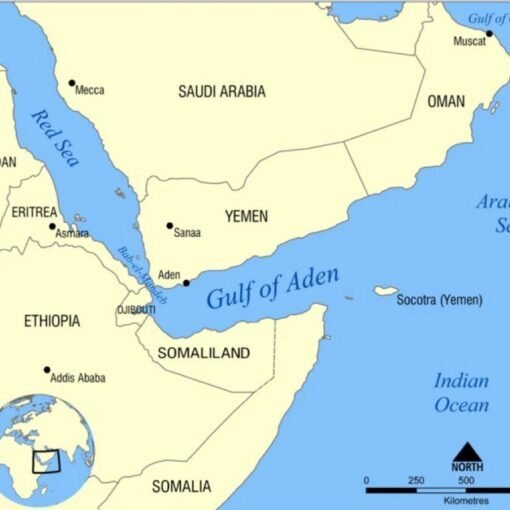
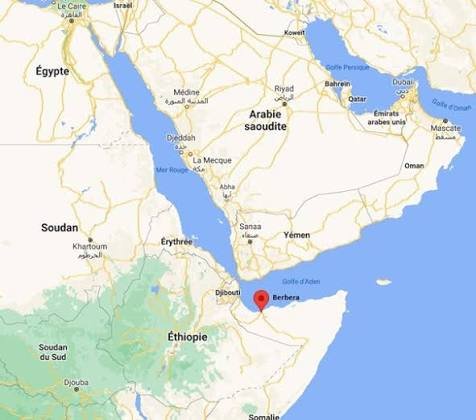
Somaliland occupies a strategic location along the Gulf of Aden near the Bab El Mandeb Strait, one of the most critical shipping corridors in the world.
A large share of global trade and energy shipments passes through this narrow maritime gateway connecting the Suez Canal to the Indian Ocean.
In an era of growing maritime insecurity, Somaliland’s stability along this coastline is of immense importance.
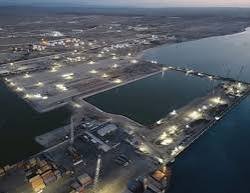
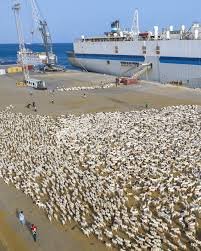
The development of Berbera Port, supported by investments from DP World has already begun transforming the region into a vital logistics hub linking Africa, the Middle East, and global shipping networks.
A Reliable Partner for International Security
The Red Sea region has increasingly become a zone of geopolitical tension.
Maritime attacks linked to regional conflicts have threatened shipping routes and global supply chains. Meanwhile, great-power competition is expanding into the region as countries seek strategic access to ports and logistics infrastructure.
In this environment, Somaliland offers something rare: stability, predictability, and partnership.
Unlike many fragile states, Somaliland has demonstrated its capacity to maintain security within its territory and cooperate with international partners on counter-piracy and maritime security.
Recognizing Somaliland could strengthen international efforts to stabilize one of the world’s most important maritime corridors.
The Cost of Non-Recognition
The continued refusal to recognize Somaliland carries real consequences.
Without recognition, Somaliland faces severe limitations in accessing international finance, development programs, and diplomatic representation.
International institutions often channel aid and investment through Somalia, despite the fact that Somaliland governs itself independently.
This arrangement not only undermines Somaliland’s economic development but also sends a troubling message: that political stability and democratic governance do not necessarily lead to international legitimacy.
A Moment for Strategic Clarity
The world is entering a new geopolitical era defined by competition for resources, control of trade routes, and regional security partnerships.
In this environment, Somaliland’s strategic importance is becoming increasingly evident.
The decision by Israel, to recognize Somaliland signaled that some countries are beginning to reassess long-standing diplomatic assumptions.
Others may soon follow Israel’s prudent decision
Recognition would not simply reward Somaliland’s democratic achievements. It would also strengthen regional stability and align international diplomacy with political realities on the ground.
The Path Forward
Recognition does not require a sudden global consensus.
Historically, many states have gained international recognition gradually as individual countries established diplomatic relations.
A similar process could unfold with Somaliland.
If a handful of influential states take the first step, broader international acceptance could follow.
Conclusion
For more than thirty years, Somaliland has demonstrated that stability, democratic governance, and peaceful political development are possible even in the most challenging environments.
Yet the international system has continued to treat Somaliland as if it does not exist.
This policy is increasingly difficult to justify.
Recognizing Somaliland align international diplomacy with political reality, reward democratic resilience, and strengthen stability in one of the world’s most strategic regions.
The question is no longer whether Somaliland functions as a state.
The real question is how much longer the world can afford to pretend that it does not.