By Prof. Nassir Hussein Kahin, International Affairs Writer, Geopolitics Analyst and Managing Editor at bridgingsomaliland.com
A Game-Changer for Somaliland’s Global Future
The U.S. Congress has introduced H.R. 7993 (Somaliland Economic Access and Opportunity Act) to improve Somaliland’s access to global financial systems. This is a significant political development aimed at ending Somaliland’s long-standing economic isolation and providing it with direct access to the global economy.
The bill outlines clear steps to connect Somaliland to the international banking system, including a pathway to access the SWIFT system, which could benefit more than 6 million people.
There is a tendency in international politics to assume that recognition comes only with flags raised at the United States or formal diplomatic declarations. But history shows otherwise. Recognition often begins in practice—through systems, institutions, and economic integration—long before it is declared in law.
What is unfolding in Washington today may prove to be one of the most strategically important shifts in Somaliland’s modern history.
This proposed legislation is not merely about banking access or technical financial inclusion. It is, in effect, a redefinition of Somaliland’s place in the international order. By creating a pathway to integrate Somaliland into systems like SWIFT, the United States is doing something profoundly political under the cover of economics: it is treating Somaliland as a functional state actor.
And in geopolitics, how you are treated often matters more than what you are called.
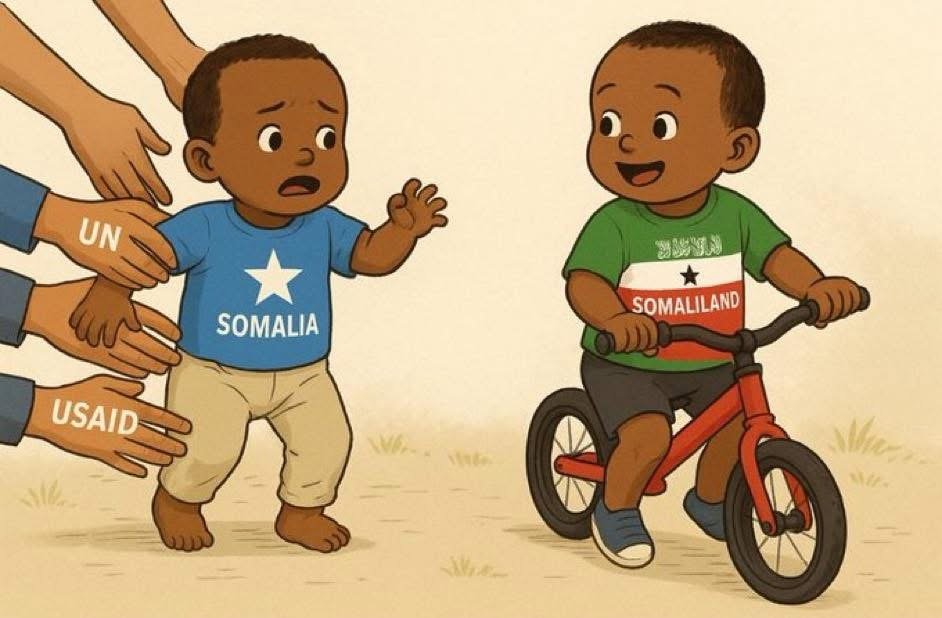
For over three decades, Somaliland has presented a paradox to the world. It has met—and in many cases exceeded—the benchmarks typically associated with statehood: peace, democratic governance, regular elections, and internal sovereignty. Yet it has remained locked out of global financial institutions, not because of failure, but because of unresolved political recognition tied to Somalia. This bill begins to break that deadlock—not through confrontation, but through quiet normalization.
By mandating the U.S. Treasury to facilitate responsible investment and strengthen compliance frameworks, Washington is addressing one of the key arguments historically used against Somaliland: concerns over financial transparency and regulatory capacity. In doing so, it removes a major barrier that has long been cited by international institutions and investors.
But the implications go far beyond economics.
At a time when the Horn of Africa is increasingly shaped by great power competition—between the United States, China, Gulf states, and regional actors—Somaliland’s strategic location along critical maritime routes makes it too important to ignore. Stability in this corridor is no longer a regional concern; it is a global one.
By engaging Somaliland economically, the United States is not only investing in a partner—it is anchoring stability in a volatile region.
This also sends a subtle but unmistakable message to the international community: isolation is no longer a viable policy. Engagement is.
For Somaliland, the opportunity is immense—but so is the responsibility.
Access to global financial systems will demand higher regulatory standards, stronger institutions, and greater transparency. It will require policymakers in Hargeisa to move quickly in aligning domestic frameworks with international expectations. Success will depend not just on external support, but on internal readiness.
Yet, if managed wisely, this moment could mark the beginning of a new phase in Somaliland’s long journey towards recognition—not through rhetoric, but through reality.
Because in the end, sovereignty is not only declared.
It is built, step by step, through participation in the very systems that define the modern world.
And with this bill, Somaliland may have just taken one of its most decisive steps yet.