The United States Can No Longer Afford to Wait on Somaliland
By Prof. Nassir Hussein Kahin, International Affairs Writer and Managing Editor at bridging Somaliland.com
The question is no longer whether Somaliland should be recognized.
The question is whether the United States can afford not to.
In the midst of an escalating confrontation involving the United States, Israel, and Iran, the global strategic map is being redrawn in real time. Maritime chokepoints are under threat, energy routes are increasingly vulnerable, and the architecture of regional security is shifting under pressure. In this new reality, long-standing diplomatic hesitations are quickly becoming strategic liabilities.
Recognition of Somaliland is no longer a symbolic or moral question. It is a matter of urgent national security.
As tensions intensify across the Gulf, the fragility of the Strait of Hormuz has once again come into sharp focus. Any disruption there sends shockwaves through global energy markets and threatens the stability of international trade. But the implications extend far beyond the Gulf. As pressure builds in one chokepoint, the world’s dependence shifts to another.
That shift is already underway—toward the Bab el-Mandeb Strait.
This narrow passage connecting the Red Sea to the Indian Ocean is one of the most critical arteries of global commerce. It links Europe to Asia through the Suez Canal and carries a significant share of the world’s trade and energy supplies. Any instability here would not only disrupt shipping but reverberate across global economies.
And overlooking this chokepoint, with quiet but undeniable strategic significance, lies Somaliland.
For decades, Somaliland has existed as a functioning state without formal recognition. It has maintained stability, built democratic institutions, and governed itself effectively since 1991—while Somalia struggled with conflict and fragmentation. Yet its political status has remained frozen in time, constrained by international reluctance to challenge outdated assumptions about territorial integrity.
That hesitation is now colliding with reality.
The war involving the United States, Israel, and Iran has exposed the vulnerabilities of existing U.S. military and logistical infrastructure in the region. Bases concentrated in the Gulf are increasingly within reach of Iranian missiles and drones. Supply chains that rely on a handful of chokepoints are under strain. The need for strategic depth—geographic, military, and diplomatic—has never been more urgent.
Somaliland offers precisely that.
Situated along the Gulf of Aden, with direct access to the Red Sea corridor, Somaliland provides a position of extraordinary strategic value. The Port of Berbera—modernized through investment by DP World—is already emerging as a critical logistics hub. With further development and formal partnership, it could become a cornerstone of U.S. and allied operations in the region.
More importantly, Somaliland offers something increasingly rare: reliability.
In a region marked by volatility, shifting alliances, and fragile states, Somaliland has demonstrated consistent internal stability and a willingness to cooperate with international partners on security and maritime protection. It is not a hypothetical partner—it is a proven one.
Yet without recognition, the United States cannot fully engage.
Diplomatic ambiguity limits defense agreements, constrains long-term investment, and prevents the kind of formal cooperation that current circumstances demand. At a time when strategic clarity is essential, this ambiguity becomes a liability.
Recognition would change that.
It would open the door to formal basing agreements, expanded maritime security cooperation, and coordinated efforts to safeguard one of the world’s most vital trade corridors. It would provide the United States with a strategic alternative to increasingly vulnerable positions in the Gulf, while strengthening its broader posture in the Red Sea.
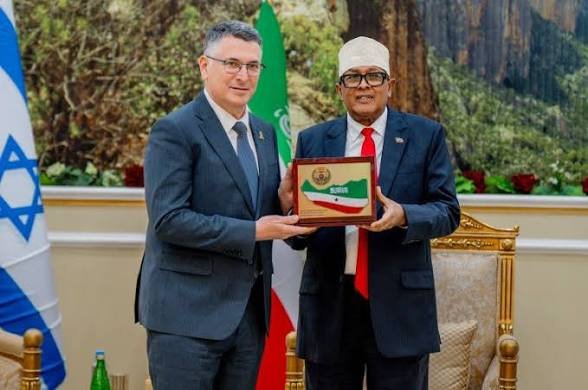
For Israel, the calculus is equally clear. Facing threats from Iran and its regional proxies, Israel has a direct interest in securing maritime routes and monitoring developments across the Red Sea and the Arabian Peninsula. Its move toward recognizing Somaliland reflects a growing awareness that geography and stability—not outdated diplomatic conventions—must guide strategic decisions.
The United States should take note.
For too long, policy toward Somaliland has been shaped by concerns over maintaining the formal unity of Somalia. But the reality on the ground tells a different story. Somaliland governs itself, secures its territory, and engages with the world as a de facto state. Continuing to ignore this reality does not strengthen regional stability—it undermines it.
In the context of an expanding regional conflict, the cost of inaction is rising.
Iran’s strategy has already demonstrated a focus on disrupting maritime trade and applying economic pressure through instability. Countering that strategy requires more than reactive measures. It requires securing alternative routes, strengthening reliable partnerships, and establishing a presence in key strategic locations.
Somaliland is central to that effort.
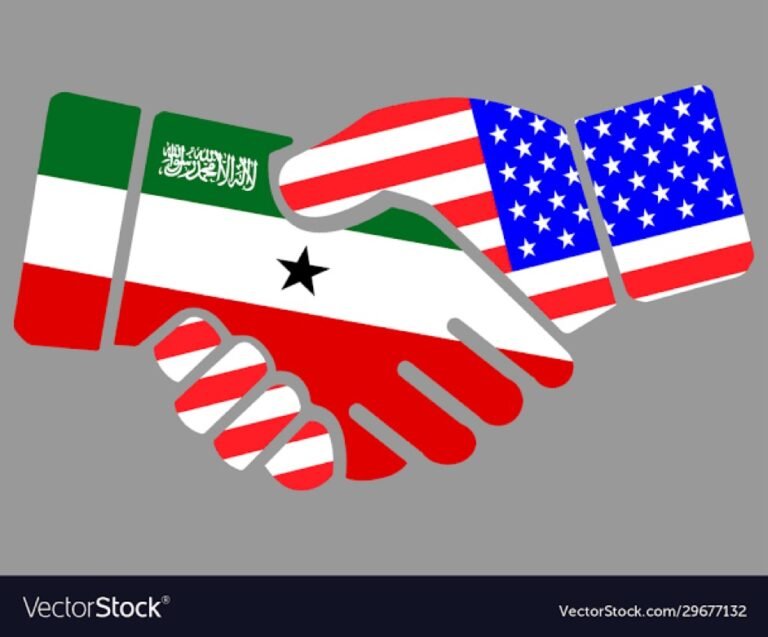
Recognition would not create a new reality—it would acknowledge an existing one and allow the United States to act on it. It would align policy with strategic necessity and transform a missed opportunity into a decisive advantage.
History often presents moments when delayed decisions can no longer be postponed.
This is one of those moments.
The United States has before it a partner that offers stability, strategic access, and alignment with its interests in one of the most critical regions in the world. What remains is the political will to act.
The world is changing rapidly. Trade routes are being contested. Alliances are being reshaped. Old assumptions are being tested.
In such a moment, hesitation carries its own risks.
Recognizing Somaliland is no longer just the right decision.
It is the necessary one..