President Cirro
By Prof. Nassir Hussein Kahin, Political Analyst, International Affairs Writer and, Executive Managing Editor: Bridgingsomaliland,
On June 19, 2025, a compelling geopolitical narrative I wrote entitled “A Red Sea Reckoning: A Horn of Africa Tragedy in Four Acts” foresaw the unraveling of diplomacy in the Horn of Africa. Now, barely a month later, the events I once considered speculative have come to life with chilling accuracy.
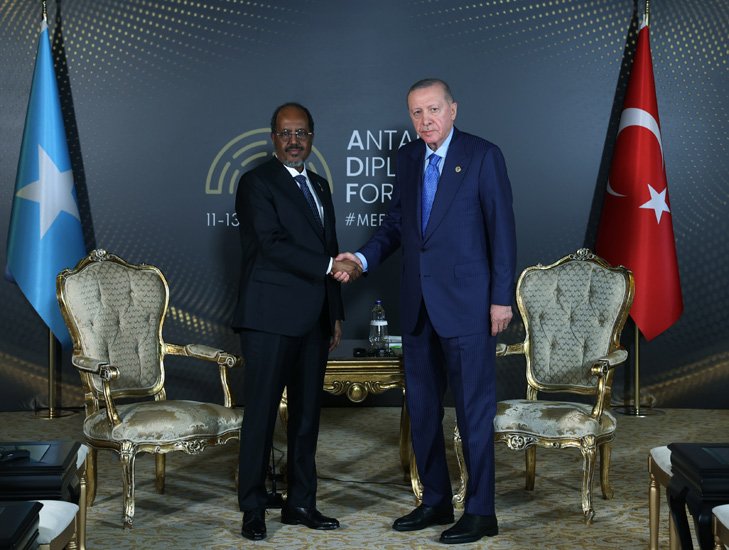
What I then wrote as a political theater—complete with masked diplomacy, proxy warfare, and betrayals—has unfolded before the world’s eyes. The fragile Ankara Declaration, once hailed as a diplomatic breakthrough brokered by Turkey, has disintegrated. The handshake (The “Hand-Kiss” of the Decade) between Ethiopia’s Prime Minister Abiy Ahmed and Somalia’s President Hassan Sheikh Mohamud, orchestrated by President Erdoğan, now serves only as a photo-op for history books.
The recent confession by Somalia’s Prime Minister—acknowledging that the MoU signed by courageous and patriotic former Somaliland President, Muse Bihi Abdi and PM Abiy Ahmed, inflicted a “diplomatic shock” that cost Somalia millions of dollars—proves just how consequential that agreement was. Somalia’s frantic global lobbying campaign to nullify the deal ultimately failed, while diverting resources from critical domestic challenges. Internal fragmentation worsened, with Puntland and Jubaland distancing themselves from Mogadishu, and Al-Shabaab reclaiming lost ground, capturing bases from beleaguered federal and AMISOM forces.
“We should have focused more on Somalia’s pressing domestic issues,” the Prime Minister lamented, “instead of waging a losing battle against the MoU.” championed by the courageous former president Muse Bixi Abdi.
Now, all eyes turn to the equally courageous and patriotic current Somaliland President, Abdirahman Mohamed Abdillahi “Ciro,” a seasoned diplomat, who has been officially invited to Addis Ababa by Prime Minister Abiy Ahmed—suggesting not just a revival, but an escalation of the Ethiopia–Somaliland pact. If the initial MoU rocked the region, a renewed version could reshape its future entirely, especially if it results in Ethiopia becoming the first African nation to formally recognize Somaliland’s independence.
UAE, Kenya, and Qatar: The Diplomatic Triad
In a strategic pivot, President Ciro has visited Kenya, the UAE, and Qatar in a diplomatic blitz aimed at consolidating Somaliland’s growing international stature. Kenya, long sympathetic to Somaliland’s statehood, is expected to follow Ethiopia’s lead if Addis recognizes Hargeisa. The UAE, heavily invested in Berbera’s development and security, remains a strategic patron of Somaliland’s Red Sea gateway. And Qatar, a long-time mediator in regional politics, is reportedly exploring development partnerships that would anchor its influence in a post-recognition Somaliland.
These visits signal that Somaliland is no longer an isolated actor but a central player in Red Sea geopolitics, strategically courted by rival Gulf states and East African regional powers alike.
The Domino Effect of Recognition
Western countries—particularly in Europe and North America—have privately signaled their readiness to recognize Somaliland, but none wished to be the first. The anticipated move by Ethiopia to lead the way would break the diplomatic stalemate with Villa Somalia. Recognition by Kenya or Djibouti would likely follow, triggering a domino effect of recognitions from major powers that had long supported Somaliland unofficially.
This shift would mark a tectonic moment in African geopolitics: a former de jure independent nation which temporarily lost that status finally restoring its de jure recognition, backed by new international alliances.