South-South New Alliance
By Prof. Nassir Hussein Kahin, International Affairs Writer, Geopolitics Analyst and Managing Editor at bridgingsomaliland.com
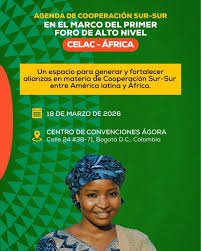
In a rapidly shifting global order, a quiet but consequential meeting in Bogota, Columbia prove to be a turning point for the Global South. Leaders and policymakers from across Latin America, the Caribbean, and Africa have gathered under the banner Community of Latin America and Caribbean States -African Cooperation, to chart a new course—one defined not by dependency, but by solidarity, sovereignty, and strategic cooperation.
At the heart of this dialogue lies a shared frustration: decades of economic marginalization, unequal trade systems, and the persistent shadow of neocolonial influence. Today, that frustration is being transformed into coordinated action.
The immediate catalyst is the ongoing Middle East energy crisis. As instability disrupts global supply chains, countries far removed from the conflict are paying the price through soaring energy costs and fragile economies. For many in Africa and Latin America, this has reinforced a painful truth: reliance on external systems leaves nations vulnerable.
But the response in Bogotá is not merely reactive—it is visionary.
Participants are pushing for a reimagined global framework: one where South–South energy cooperation reduces dependency on volatile regions, where financial systems are restructured to prioritize development over debt, and where political alignment amplifies the voice of historically overlooked nations.
For Africa, this moment carries profound significance. Countries such as South Africa, Nigeria and Kenya are increasingly asserting themselves as continental anchors in this emerging alliance. Yet, the Horn of Africa—arguably one of the most strategically vital regions in the world—remains underrepresented in such transformative conversations.
This is where Somaliland enters the equation.
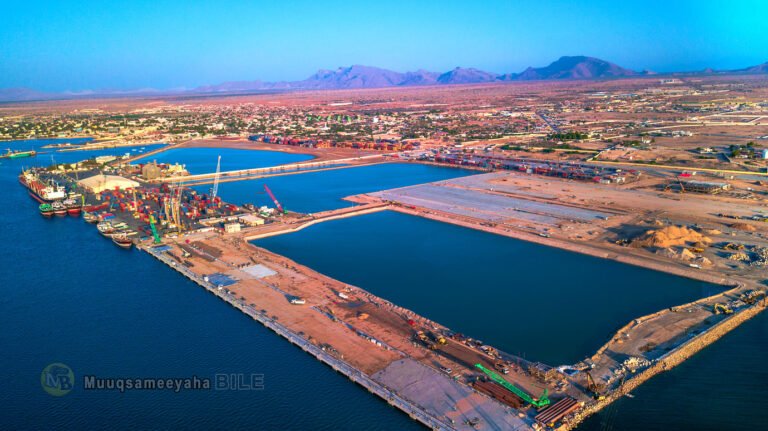
For over three decades, Somaliland has defied expectations. It has built democratic institutions, maintained internal stability, and safeguarded a strategic coastline along the Gulf of Aden—one of the world’s most critical maritime corridors. Yet, despite its achievements, it remains excluded from the very platforms now shaping the future of the Global South.
The irony is striking.
A conference built on the principles of self-determination and resistance to neocolonialism is unfolding without the participation of one of Africa’s most compelling case studies in grassroots sovereignty.
If the Bogotá dialogue is to live up to its ideals, it must expand its lens. Inclusion cannot be selective. Recognition of political realities on the ground—especially in regions like the Horn of Africa—is essential for any credible South–South partnership.
For Somaliland, the lesson is equally clear: the world is reorganizing, with or without you.
Hargeisa must proactively engage emerging blocs like CELAC–Africa partnerships, deepen bilateral ties with African and Latin American states, and position itself as a strategic partner in energy security, maritime trade, and regional stability. The tools are already there—diplomacy, economic openness, and a compelling governance narrative.
The Bogotá meeting is more than a conference. It is a signal.
A signal that the Global South is no longer content to operate on the margins. A signal that alliances are being redrawn, and that influence will increasingly belong to those who organize, cooperate, and assert their place in the world.
For Somaliland, the message is urgent and unmistakable:
The future is being negotiated now. The question is whether it will have a seat at the table—or remain on the menu.
It high time to Re-recognize Somaliland Now!