
Somaliland Coast Guard Commander and Taiwan Coast Guard Chief
By Prof: Nassir Hussein kahin, Political Analyst, International Affairs Writer and Managing Editor of bridgingsomaliland.com
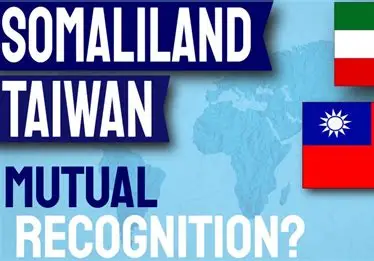
The recent maritime security agreement between Somaliland and Taiwan has sent ripples across the Horn of Africa and the broader Indo-Pacific, signaling more than just a cooperative arrangement between coast guards. Signed during a high-level visit by Somaliland’s Foreign Minister Abdirahman Dahir Adam to Taipei, the pact represents a bold declaration of self-determination by two unrecognized democracies facing mounting pressure from powerful adversaries.
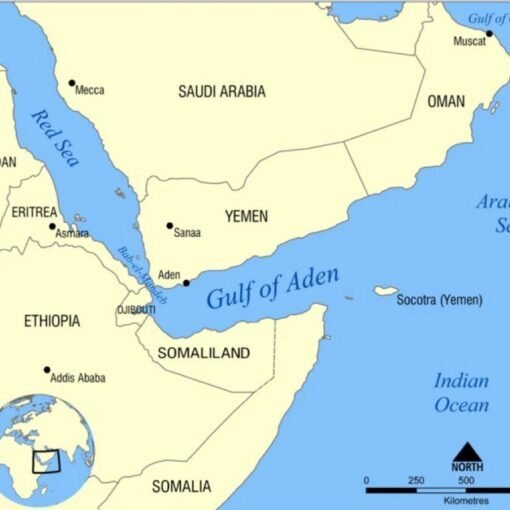
At its core, the agreement—signed by Somaliland Coast Guard Commander Admiral Ahmed Hurre Hariye and Taiwan Coast Guard Chief Chang Chung-lung—seeks to enhance maritime security, surveillance, and defense capabilities in Somaliland’s territorial waters. However, its strategic implications go far deeper. The pact comes on the heels of escalating tensions in the Red Sea and Gulf of Aden, particularly following Somalia’s controversial maritime deal with Turkey, which grants Ankara access to nearly 95% of Somalia’s maritime domain for energy exploration. This Turkish-Somali arrangement not only asserts jurisdiction over waters governed independently by Somaliland since 1991 but also raises alarms about territorial encroachment, economic blockade, and foreign military expansion.
Consequently, Somaliland’s alignment with Taiwan is more than symbolic. It represents a preemptive response to growing Turkish militarization and Chinese geopolitical encroachment, while simultaneously strengthening Hargeisa’s fragile security infrastructure and expanding its diplomatic reach. As expected, this unexpected alliance has provoked immediate and forceful reactions from regional powers who see their influence at risk.
China, for example, has predictably condemned the deal, framing it through the lens of its One-China policy. Beijing is likely to intensify its diplomatic isolation campaign against both Taiwan and Somaliland, leveraging loans, infrastructure projects, and trade incentives to push African states into rejecting the agreement. Pressure may mount on regional institutions such as the African Union and IGAD to denounce the pact and declare it illegitimate.
Turkey, meanwhile, sees its own strategic interests challenged. Having already signed a military pact with Somalia earlier this year, Ankara could escalate by deploying naval assets to the Gulf of Aden under the pretext of protecting Somali sovereignty. At the same time, Turkey might reinforce its role as a diplomatic and military patron to Mogadishu, lobbying for multilateral condemnation of the Taiwan-Somaliland initiative while positioning itself as a mediator—albeit one favoring Somalia’s territorial claims.
Egypt, another key regional actor, may align more openly with Somalia. With its own ambitions in the Red Sea and longstanding rivalry with Ethiopia, Cairo could offer military training and equipment to the Somali navy, reinforcing efforts to curtail Somaliland’s influence at sea. Additionally, Egypt might attempt to link the Taiwan-Somaliland pact to regional instability and lobby Arab League and African Union members to issue formal condemnations, portraying the agreement as a destabilizing force in an already volatile corridor.
Somalia, unsurprisingly, has reacted with the strongest rhetoric. Mogadishu has banned Taiwanese citizens, though the ban was later cancelled due to U.S. pressure, from entering the country and declared the pact illegal. Future steps may include denying access to Somali airspace and ports for any entity associated with the agreement, as well as lobbying international bodies such as the UN, AU, and IGAD to impose sanctions and formally reject Somaliland’s actions.
Yet while autocratic and revisionist actors push back, democratic nations are quietly expressing support. The United States, for instance, is unlikely to extend formal recognition to Somaliland but is expected to deepen informal cooperation, particularly in areas such as maritime security, counter-terrorism, and digital infrastructure—domains where Taiwan excels. As Washington conducts its largest-ever Talisman Sabre military exercises in the Pacific with 19 allied nations, the move sends a subtle but clear message: Taiwan and its partners are not alone in confronting Beijing’s assertiveness. Quiet maritime assistance to Somaliland, possibly through existing U.S. installations in Djibouti and Somalia, may also be in the cards.
Similarly, the UK and Canada are walking a diplomatic tightrope. While publicly reaffirming Somalia’s territorial integrity, both countries have historical ties to Somaliland and may continue to support its democratic development behind closed doors. Their focus will likely be on encouraging peaceful dispute resolution while allowing space for Somaliland to engage with democratic partners on governance and maritime professionalism.
Japan and Australia, though geographically distant, are closely aligned with Taiwan and broadly committed to defending international maritime norms. Their participation in joint exercises like Talisman Sabre highlights a broader ideological alignment: democracies must support one another against authoritarian expansion. Though not directly engaged in the Horn, their actions reinforce a global context in which the Taiwan-Somaliland partnership resonates as part of a wider struggle for sovereignty and democratic self-determination.
In the end, the Somaliland–Taiwan maritime pact marks a significant shift in the strategic landscape of the Horn of Africa. It defies the conventional narrative of diplomatic isolation for unrecognized states and introduces a new model of pragmatic cooperation based on mutual interests and democratic values.
As regional powers mobilize in opposition—militarily, economically, and diplomatically—Somaliland finds itself not just asserting autonomy, but stepping into the center of an evolving contest that spans the Red Sea, the Gulf of Aden, and the Indo-Pacific.
Please submit your opinion or comments below: