From Livestock to Strategic Ports: The Economic Foundations and Future of Somaliland
By Nassir Hussein Kahin, Political Analyst, International Affairs Writer and Managing Editor at bridging Somaliland.com
In the Horn of Africa, Somaliland has quietly built one of the region’s most resilient and self-reliant economies despite lacking international recognition. Without access to international financial institutions such as the IMF or World Bank, the territory has relied on a unique blend of pastoral wealth, diaspora remittances, trade networks, and strategic infrastructure. From the vast livestock herds that roam its arid plains to the expanding maritime gateway of Berbera, Somaliland’s economy reflects both traditional foundations and emerging geostrategic opportunities.
At the heart of Somaliland’s economy lies livestock. For centuries, pastoralism has shaped the social and economic life of the region, and today it remains the backbone of national production and exports. Sheep, goats, camels, and cattle dominate rural livelihoods, with Somaliland hosting millions of animals across its pastoral regions. Livestock production contributes roughly 30–65% of the country’s GDP, depending on estimates, and constitutes the majority of export earnings.
The export trade in animals—particularly sheep and goats—links Somaliland’s rural economy to the markets of the Gulf. Every year, millions of animals are shipped through Berbera to Saudi Arabia, Oman, and other Middle Eastern countries, especially during the Hajj pilgrimage season when demand for sacrificial animals surges.
This livestock economy is more than just a trade; it is a vast ecosystem involving pastoralists, traders, veterinarians, transporters, exporters, and port operators. For rural communities across Sool, Sanaag, and Togdheer regions—where most herds are concentrated—livestock serves as both a store of wealth and a livelihood safety net. Yet the sector remains underdeveloped in terms of value addition. Much of the export trade involves live animals rather than processed meat or dairy products, limiting the economic value captured domestically.
Beyond livestock, Somaliland’s economy also relies heavily on diaspora remittances and trade. Somalilanders living abroad send an estimated $1.5 billion annually, forming a major pillar of household income and supporting consumption, education, and small businesses across the territory. These remittances have helped stabilize the economy, compensate for limited foreign investment, and fuel the growth of urban centers such as Hargeisa and Burao.
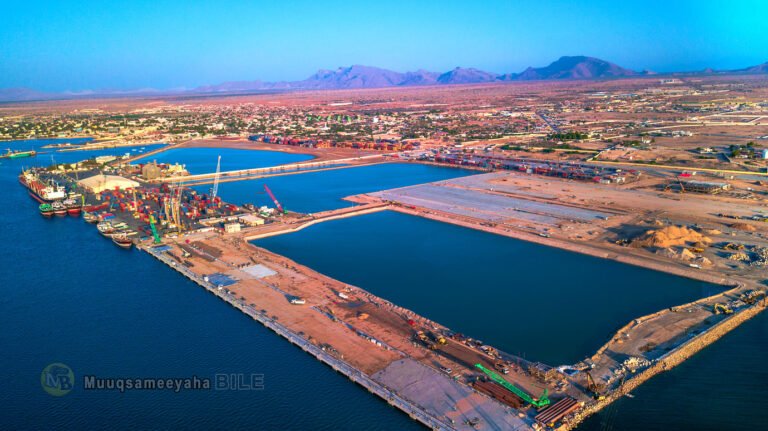
However, Somaliland’s most transformative economic asset may not be on land but along its coastline. The Port of Berbera, located on the Gulf of Aden, has emerged as a strategic gateway linking Africa to the Middle East and beyond. Historically, Berbera served as a livestock export hub, but in recent years it has begun evolving into a modern logistics and trade corridor.
A major turning point came with the modernization of Berbera through a multi-hundred-million-dollar investment led by DP World. The upgraded port now includes a deep-water container terminal, modern cargo facilities, and expanded logistics infrastructure capable of handling some of the world’s largest container ships.
This expansion is expected to transform Berbera into a regional trade hub serving not only Somaliland but also neighboring Ethiopia, one of Africa’s fastest-growing economies. Ethiopia, a landlocked nation of more than 120 million people, relies heavily on foreign ports for trade. As transport corridors linking Ethiopia to Berbera improve, Somaliland’s strategic location could turn the port into a major gateway for East African commerce.
The development of the Berbera Economic Zone further strengthens this vision. Spread across more than 1,200 hectares, the zone is designed to attract logistics companies, manufacturing firms, and exporters who can process agricultural and livestock products before shipping them abroad. If fully realized, the project could generate tens of thousands of jobs and integrate Somaliland more deeply into global supply chains.
Beyond livestock and ports, Somaliland’s economy possesses untapped potential in several sectors. The territory’s long coastline—stretching roughly 850 kilometers along the Gulf of Aden—offers rich fishing grounds that remain largely underexploited. Despite the potential to harvest tens of thousands of tons of fish annually, the fisheries sector currently contributes only a small share of national income.
Agriculture, though constrained by limited rainfall and arid terrain, also holds opportunities through irrigation, drought-resistant crops, and commercial farming initiatives. Meanwhile, the services sector—particularly telecommunications—has become surprisingly dynamic. Mobile money services and private telecom companies have transformed everyday economic transactions, making Somaliland one of the most digitally connected societies in the region.
Natural resources may represent another frontier. Early exploration suggests the presence of minerals, oil, gas, and even lithium deposits. If confirmed and responsibly developed, these resources could reshape the economic landscape and attract international investors seeking critical minerals for modern technologies.
Yet Somaliland’s economic journey remains constrained by a fundamental political reality: the lack of international recognition. Without sovereign recognition, Somaliland cannot access global financial institutions, development loans, or many formal investment channels. This forces the government to rely heavily on customs duties—particularly those collected at Berbera—which account for the majority of public revenue.
Despite these constraints, the territory has managed to maintain modest but steady growth, with economic expansion projected at around 3–4 percent annually. The resilience of the economy reflects a combination of entrepreneurial culture, diaspora support, and the strategic advantages of geography.
Ultimately, Somaliland’s economy tells a broader story about adaptation and potential. Rooted in pastoral traditions yet increasingly connected to global trade routes, the territory stands at the intersection of history and opportunity. If infrastructure development continues, value-added industries emerge, and international partnerships deepen, Somaliland could evolve from a livestock-based economy into a regional commercial hub linking Africa, the Middle East, and the wider world.
In that sense, the future of Somaliland’s economy may lie in combining its oldest asset—livestock—with its newest one: strategic access to one of the world’s most important maritime corridors.
With sources from From:
Somalilandinkenya.com
Somalilandcentral.com
dpworld.com