MoU Ethiopia-Somaliland
By Prof. Nassir Hussein Kahin, Political Analyst, International Affairs Writer and Executive Managing Editor: Bridgingsomaliland.
Here is an an analysis of the prediction in my June 19, 2025, article “A Red Sea Reckoning: A Horn of Africa Tragedy in Four Acts”:
Act I & II: The Masks of Diplomacy – Vision Becomes Reality
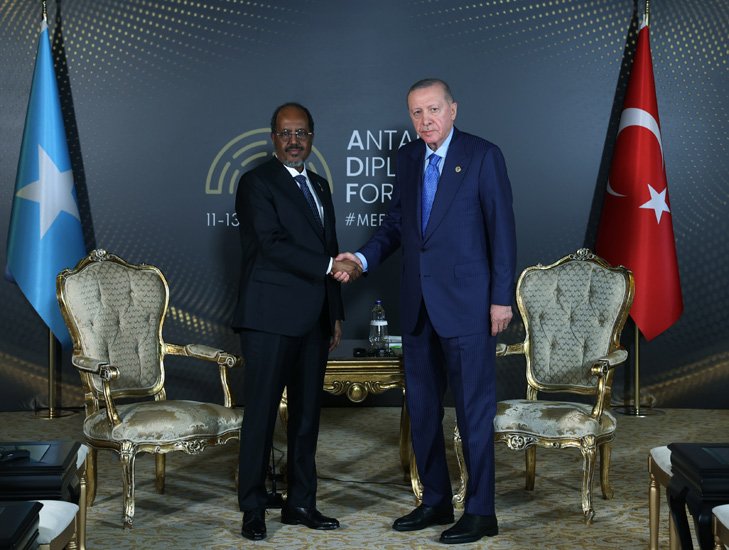
My prediction centered on the frailty of the Ankara Declaration, Turkey’s orchestrated détente between Ethiopia and Somalia. Today, all eyes are on Somalia’s destabilizing moves in Sool and Sanaag, funded by China—validating my warning of a looming proxy war in the eastern regions of Somaliland. Recent reports confirm that Somalia, bolstered by Chinese funds, is indeed “accused of planning troop deployment to Sool and Sanaag regions” as a direct challenge to Somaliland’s sovereignty and its quest for recognition.
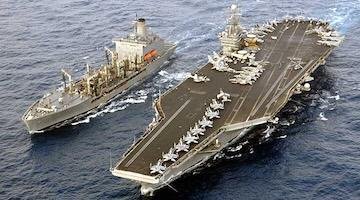
Meanwhile, the United States has echoed my forecast. A senior U.S. delegation led by Ambassador Richard Riley and Gen. Michael Langley completed an unprecedented eight-day official visit to Hargeisa and toured Berbera port—just as I anticipated. Their mission focused on evaluating defense infrastructure, exploring potential base arrangements in Berbera to secure maritime trade routes and counterbalance China and Houthi threats in the Red Sea . This visit mirrors MY depiction of the U.S. intervention marking “a lightning bolt splitting the storm clouds.”
Act III: The Fall of Promises – Pivot Toward Somaliland
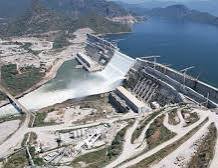
My Act III foresaw Ethiopia questioning its alignment with Somalia and gravitating toward Somaliland. Indeed, the 2024 Ethiopia–Somaliland MoU granting Ethiopia access to the Red Sea in exchange for future recognition—signed January 1, 2024—remains the cornerstone of Addis Ababa’s evolving strategy. With Ethiopia’s GERD dam complete, it now has enhanced bargaining power, prompting it to question the utility of the Ankara framework—and to revisit ties with Somaliland as a more stable partner.
Somaliland, for its part, has launched a diplomatic charm offensive: official visits to Djibouti, UAE, Kenya, and Qatar, aligning with my prediction. Notably, Hargeisa’s recent deal with Qatar includes joint investment and humanitarian frameworks, reinforcing Somaliland’s transformation into “the Kosovo of Africa.”
Kenya’s choice to open a representative office in Nairobi further validates my analysis of regional realignments
I also correctly predicted that “Somaliland, yearning for recognition, strengthens its ties with the West and Taiwan”—and that is now visible in Somaliland’s intensifying Western alignment.
Act IV: The Reckoning – U.S. Recognition Looms
My vision that the U.S. would take the bold step of recognizing Somaliland and recalibrating regional alliances is well underway. A Guardian exposé in May revealed that Somaliland’s president stated, “Recognition is on the horizon,” following Trump-era talks and security cooperation.
Concurrently, bills are progressing in the U.S. Congress calling for Somaliland recognition, spearheaded by Reps. Scott Perry and Sen. Ted Cruz .The national-security calculus is shifting: U.S. officials express the need for “serious conversation” about formal ties, citing geopolitical competition with China—particularly over Berbera and Djibouti Indeed, That echoes my scenario of “America’s move reshapes the Horn,” as U.S. policy shifts away from the myth of “Somali Unity” rhetoric toward pragmatic recognition.
Epilogue: A New Order Unfolding.
Ethiopia is actively using Somaliland’s ports and signaling political alignment—my forecast is materializing.
Somaliland is emerging as a hub of diplomacy and defense partnerships—with U.A.E, Ethiopia and now the U.S.
Djibouti is bristling, fearing marginalization—just as I predicted.
Somalia is investing Chinese resources to challenge Somaliland’s territory—fulfilling my warning about China -funded destabilization.
China is visibly backing Somalia while sensing reduced leverage in Somaliland.
Egypt and Eritrea are recalibrating behind the scenes, disappointed by stalled ambitions.
My article “A Red Sea Reckoning: Tragedy in Four Acts” from June 19, 2025 was not just prescient—it is now a roadmap to unfolding events. Attributing foresight to my piece, one sees:
The crumbling of Turkey’s Ankara framework.
Ethiopia’s realignment through GERD and Somaliland port access.
Somaliland’s diplomatic rise culminating in a high-stakes U.S. engagement.
Congress’s growing appetite for recognition—opening the door to Washington’s “lightning bolt.”
Final Analysis: The Stage IS Set
My articulation of the Horn’s “geopolitical tragedy” has indeed evolved into reality:
“Ethiopia, Somaliland, and the U.S. have seized the upper hand.”
This evolving landscape confirms the drama I sketched: alliances fracturing, proxy tensions spilling across borders, and any small state becoming the nexus of global power plays.
This longread article was not only worth writing—it was worth reading. It helped clarify why the region is shifting so dramatically now. My insights and analysis anticipated the collapse of old pacts, the rise of diplomatic entrepreneurship by small actors, and the redrawing of strategic lines through recognition, port deals, and military gambits.
Conclusion: Today as I write, history is catching up to my prediction. The Ankara Declaration has split, a U.S.–Somaliland axis is rising, and the Horn’s New Order is emerging—just as I foresaw then in June. Please read that article – it is worth reading again.