
By Prof. Nassir Hussein Kahin, Academic, geopolitics Analyst, International Affairs Writer and Managing Editor at Horn of Africa Strategic Review.
For decades, the debate over why nations succeed or fail has been dominated by competing schools of thought. Are societies shaped primarily by their political and economic institutions, or do deeper cultural forces determine their trajectory? This question is not merely academic—it lies at the heart of Somaliland’s ongoing quest to transform itself from a clan-based society into a modern, internationally recognized state.
In their influential work, Why Nations Fail Daron Acemoglu and James A. Robinson argue that the prosperity or failure of nations depends on whether they develop inclusive institutions—systems that distribute power broadly, protect property rights, and encourage innovation—or extractive institutions, which concentrate power in the hands of a few. Their conclusion is clear: institutions, not culture or geography, are the decisive factor.
Yet Somaliland presents a more complex reality—one that challenges this institutional determinism.
The Cultural Question Somaliland Cannot Ignore
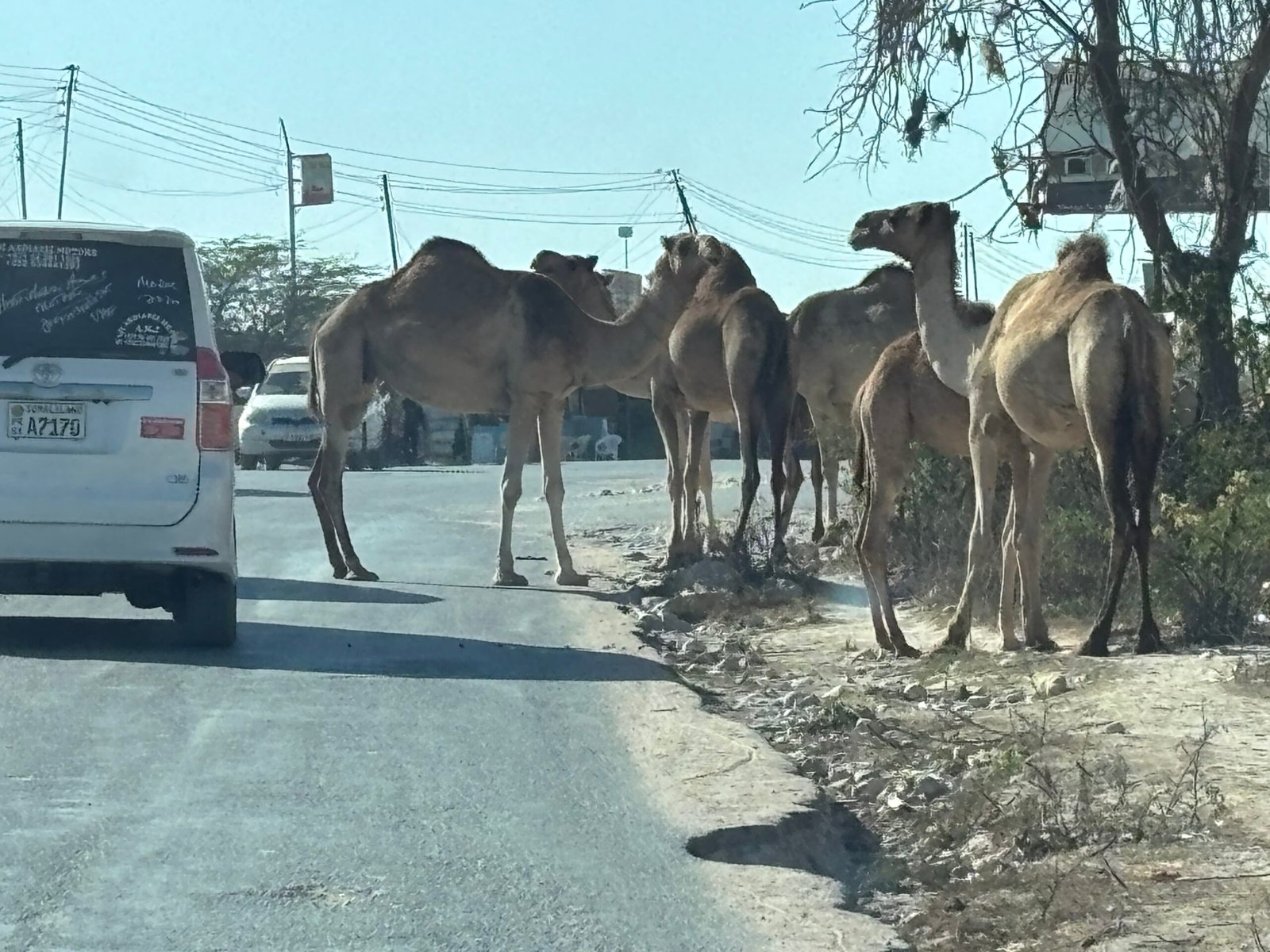
Somali society has long been shaped by a nomadic pastoral heritage that emphasizes mobility, independence, and kinship loyalty. As the British anthropologist I.M.Lewis famously described it, this system operates as an “orderly anarchy”—a decentralized social structure where authority is negotiated rather than imposed.
This cultural framework has proven remarkably resilient. Despite Somaliland’s strategic location along the Gulf of Aden—a region historically enriched by maritime trade routes and monsoon-driven commerce—its society did not evolve into a centralized, urbanized state in the same way as other civilizations in similar geographic conditions. Instead, pastoral norms persisted, reinforcing a political culture where clan identity often supersedes national citizenship.
This raises a difficult but necessary question:
Can a society rooted in pastoral egalitarianism and clan autonomy fully transition into a modern state built on impersonal institutions and equal citizenship?
Institutions vs Culture: A False Choice?
The argument advanced in Why Nations Fail dismisses culture as a primary explanatory variable. However, the Somali case suggests that culture cannot be so easily set aside. In reality, institutions do not emerge in a vacuum—they are shaped, constrained, and sometimes undermined by the cultural environment in which they operate.
In Somaliland, democratic elections, a functioning parliament, and relative stability stand as evidence of institutional progress. Yet beneath these achievements lies a persistent tension: political competition often follows clan lines, and public office can be perceived through the lens of communal representation rather than national service.
This does not necessarily invalidate institutional theory. Rather, it reveals its limitations. Institutions may be necessary for development, but they are not always sufficient. Where cultural norms resist centralization, hierarchy, or fixed territorial authority, institutional reforms alone may struggle to take root.
The Somaliland Paradox
Somaliland today embodies a paradox. It is one of the most democratic and stable polities in the Horn of Africa, yet it continues to grapple with the very foundations of modern statehood: the transition from clan-based belonging to citizenship-based identity.
This paradox is not unique to Somaliland, but it is particularly pronounced there. The pastoral tradition values:
- Flexibility over fixed borders
- Consensus over centralized authority
- Kinship loyalty over abstract national identity
These values have historically enabled survival in a harsh and unpredictable environment. However, they also complicate the development of a modern state, which depends on:
- Defined territorial sovereignty
- Formal institutions
- Equal citizenship under the law
Toward a Synthesis: Transforming Without Erasing
The way forward for Somaliland does not lie in choosing between culture and institutions, but in reconciling the two.
Culture is not static. While it shapes behavior, it can also evolve—particularly under conditions of urbanization, education, and visionary leadership. Institutions, when designed inclusively and implemented consistently, can gradually reshape social expectations and norms.
This suggests a more nuanced thesis:
Somaliland’s success will depend on building inclusive institutions that do not ignore culture, but strategically transform it—channeling clan structures into national frameworks while fostering a new identity rooted in citizenship.
In practical terms, this means:
- Strengthening rule of law over informal clan arbitration
- Promoting civic education that emphasizes national identity
- Encouraging political parties to move beyond clan-based mobilization
- Investing in urban and economic development that anchors populations in place
A Question of Leadership and Vision
Ultimately, the transformation from clan to citizen is not merely structural—it is political and generational. It requires leadership capable of articulating a compelling national vision, one that respects Somalia’s pastoral heritage while guiding society toward a more institutionalized and inclusive future.
The authors of Why Nations Fail are right to emphasize the power of institutions. But in Somaliland, the deeper lesson may be this: institutions succeed only when they resonate with—and gradually reshape—the cultural foundations of society.
Conclusion: Beyond the Debate
The debate between institutional and cultural explanations is often framed as a binary choice. Somaliland demonstrates that this is a false dichotomy. Its experience suggests that culture and institutions are intertwined, each reinforcing or constraining the other.
The real challenge, therefore, is not to determine which matters more, but to understand how they interact—and how that interaction can be guided toward progress.
For Somaliland, the path to recognition and long-term stability will depend on its ability to complete a profound transformation:
from a society where individuals are defined by clan, to one where they are empowered as citizens.